
সংবাদ শিরোনাম : Discipline Before Development: How China’s Eight-Point Directive Forged a Nation
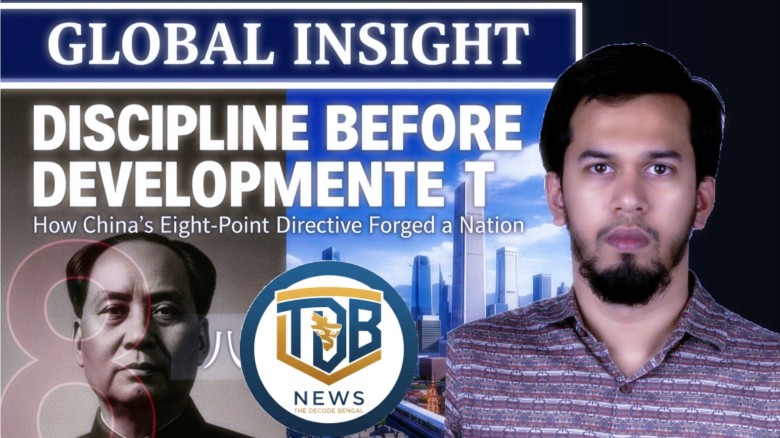
Infrastructure is far more than concrete and steel—it’s the invisible framework that enables societies to flourish. In roughly forty years, China has reshaped itself from a modest developing country into a global leader in infrastructure. Today, its sprawling high-speed rail network, extensive highway system, world-class airports and gleaming new cities stand as proof of that transformation. Yet those achievements rest on something deeper than engineering prowess: a culture of strict accountability, crystallized in the Central Leadership’s Eight-Point Directive.
Shortly after President Xi Jinping assumed office, he issued the Eight-Point Directive (中央八项规定) on December 4, 2012, to tackle bureaucratic bloat, curb corruption and stamp out waste. Rather than relying solely on rules on paper, this initiative demanded a shift in mindset—public servants were to serve with humility, transparency and genuine concern for ordinary people.
Early on, leaders insisted that officials step out of their offices and spend time in the very villages, towns and neighborhoods they were meant to serve—gathering insights face-to-face rather than relying on secondhand reports.
At the same time, cumbersome layers of bureaucracy were pared back: routine gatherings and ceremonial functions were minimized, and lengthy, multi-page documents were replaced by focused briefs designed to speed up decision-making.
Official travel also came under tighter control.
Overseas trips were reserved strictly for essential engagements, cutting both costs and carbon footprints.
Bulky motorcades and oversized security details were scaled back so officials could move more freely among the public, easing traffic disruptions and fostering closer ties with communities.
Grand state dinners and lavish receptions were swapped for simple, purpose-driven gatherings that emphasized service over spectacle.
Coverage shifted away from choreographed ceremonies toward deep-dive stories on real problems and actual progress, using substantive reporting to keep officials directly accountable.
Every ministry and agency embraced an ethos of economy, with firm budget ceilings in place so that each yuan of public funds was spent with clear intent.
Ten years after these reforms began, the impact is unmistakable: a leaner, more responsive administration has laid the groundwork for faster, more transparent infrastructure projects—and a stronger bond of trust between citizens and their government. Extravagant spending has dwindled, bureaucratic hurdles have eased and a new norm of open, accountable governance has taken root. Projects are no longer derailed by hidden costs or opaque processes; instead, they proceed with clear milestones, public updates and rigorous oversight. From the Beijing–Shanghai high-speed rail corridor to major urban renewal schemes, China’s infrastructure now moves at unparalleled speed—and with fewer unexpected detours.
What makes this story remarkable is how a handful of focused reforms transformed everyday administration into a launchpad for nation-building. By rooting out waste and insisting on hands-on leadership, China ensured that each yuan invested yielded concrete benefits—whether linking remote counties by rail or modernizing cityscapes.
Bangladesh, too, faces the challenge of turning bold infrastructure visions into tangible progress. We strive to build roads, bridges and transit systems that connect communities and power economic growth. Yet with project delays, budget overruns and governance gaps still evident, it is worth pausing to ask: Could a similar commitment to disciplined, transparent administration help us bridge the gap between ambition and achievement?
Answering that question may hold the key to transforming our own development dreams into lasting reality. After all, no grand plan can succeed without the steady hand of accountability guiding it from start to finish.
The Eight-Point Directive offers one example of how targeted governance reforms can underpin infrastructure success. As we chart Bangladesh’s path forward, reflecting on these lessons may spark new ideas for strengthening our institutions—ensuring every project truly serves the public good.
Author: President, SinoBangla Impact Network
Email: akibirfan@sbin.global