
 Online Desk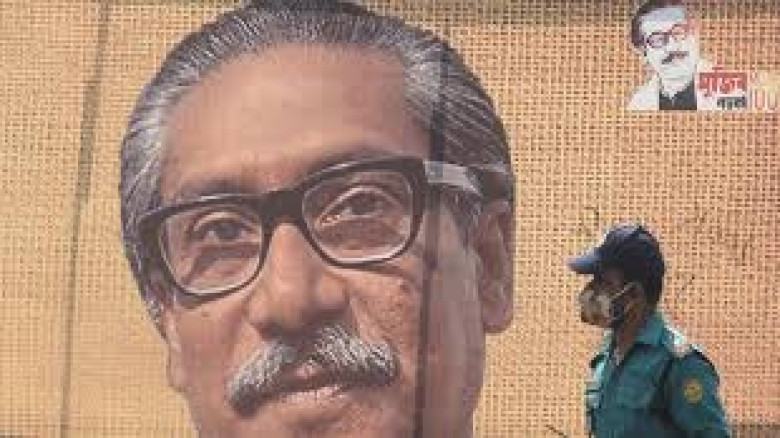
By TDB News Desk
DHAKA – In a ruling that has sent seismic shockwaves through Bangladesh's political landscape, the International Crimes Tribunal (ICT) in Dhaka has sentenced former Prime Minister Sheikh Hasina to death in absentia, finding her guilty of crimes against humanity linked to the brutal crackdown on the student-led "July Uprising" of 2024.
The verdict, delivered after months of politically charged hearings, marks a definitive and symbolic reckoning for the nation’s longest-serving leader—and arguably, the final unravelling of the founding legacy of Bangladesh.
The Charge: Accountability for the July Carnage
The Tribunal, the same institution established by Hasina herself to prosecute 1971 war criminals, ruled that the former Prime Minister was the "mastermind and principal architect" behind the state-sponsored violence that claimed up to 1,400 lives.
Her co-accused, former Home Minister Asaduzzaman Khan Kamal, was also sentenced to death.
Speaking from her self-imposed exile (widely reported to be in India), Hasina immediately branded the trial a "politically motivated charade" orchestrated by the unelected interim government of Chief Advisor Muhammad Yunus, insisting she was denied a fair judicial process.
Beyond the Sentence: The Death of an Ideology
The consequences of this verdict extend far beyond the legal fate of one individual. They touch the very foundational identity of Bangladesh.
Sheikh Hasina was not just a politician; she was the daughter of Bangabandhu Sheikh Mujibur Rahman, the 'Father of the Nation' and the undisputed hero of the 1971 Liberation War.
However, the events leading up to and following her fall have systematically dismantled this historical narrative:
The Erasing of '32': The attempt to erase the memory of Mujib’s former home at Dhanmondi 32, a sacred site of the nation's independence movement, signals a forceful rewriting of history.
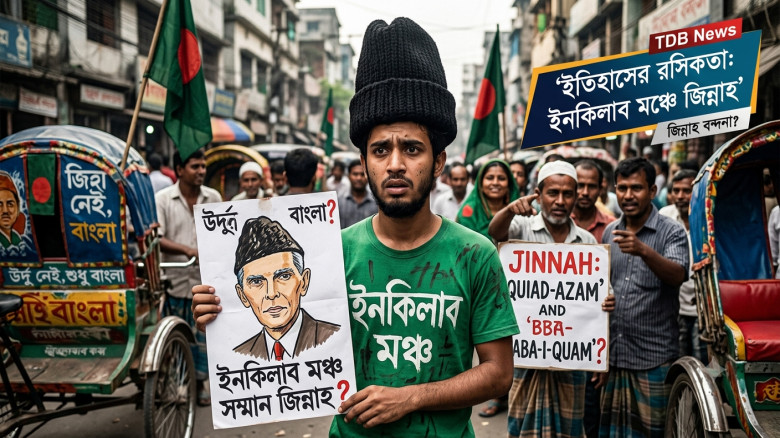
The Symbolic Shift: The current interim regime, which has vowed to establish a fully democratic and accountable government, has concurrently overseen a notable normalization and revival of political and trade ties with Pakistan.
For many, the death sentence on Mujib's heir marks the moment Bangladesh symbolically discards the ideological boundary—forged in blood—that once defined its independence.
The message is clear: the post-Mujib political era is over. The country is seeking a new national identity defined less by its liberation trauma and more by its future goals of democratic reform and accountability.
What Lies Ahead: A Diplomatic Standoff
All eyes now turn to New Delhi. Bangladesh’s Foreign Ministry has formally urged India to extradite Hasina and Kamal.
Experts, however, widely predict India will refuse. The 2013 extradition treaty between the two nations includes a critical clause allowing a refusal if the offense is deemed "political" or the process is not in good faith.
The future is precarious:
Legal Battles: Hasina's team will undoubtedly appeal to the Supreme Court, challenging the in absentia process.
Awami League: The verdict effectively removes Hasina as a political force, forcing the banned Awami League to find a new, non-Mujib-family-affiliated leadership if it hopes to re-enter the democratic process.
Regional Tensions: A protracted diplomatic spat with India over the extradition request is inevitable and will test the stability of the new political alignment.
The verdict, while delivering a form of justice to the victims of the July Uprising, has simultaneously concluded an entire chapter of Bangladesh’s national life. The country now begins the arduous task of nation-building on new, turbulent, and uncertain ground.